
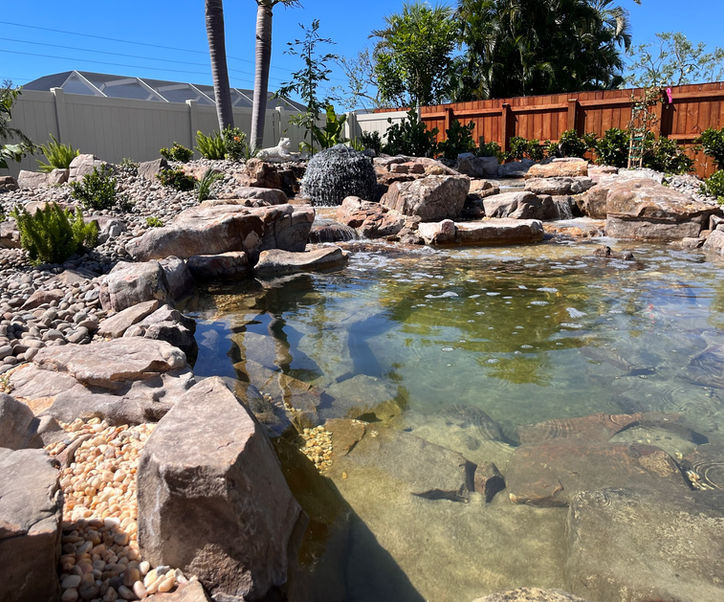
Keeping Your Water Features Beautiful and Healthy in Florida’s Climate
Water features add a stunning visual element and soothing ambiance to any Florida landscape, but our unique subtropical climate creates specific maintenance challenges that homeowners need to understand. From backyard ponds and fountains to pondless waterfalls and formal water gardens, each type of water feature requires regular care to stay clean, functional, and beautiful. At Alpha Omega Outdoor Services, our waterscape specialists help homeowners throughout Southwest Florida maintain their water features year-round.
This comprehensive guide covers everything you need to know about maintaining water features in Florida’s warm, humid environment.
Understanding Florida’s Impact on Water Features
Florida’s climate affects water features differently than cooler regions. Our warm temperatures year-round mean that algae grows faster, evaporation rates are higher, and biological processes in ponds never fully slow down. The good news is that we rarely deal with freeze damage. The challenge is that maintenance is truly a year-round responsibility rather than a seasonal one.
Key factors that influence water feature maintenance in Florida include:
- Consistent warm water temperatures that promote rapid algae growth
- High humidity that can affect equipment and surrounding hardscape
- Intense UV exposure that breaks down certain materials faster
- Heavy seasonal rainfall that can alter water chemistry quickly
- Sandy soil conditions that affect pond liner stability
Algae Control: Your Biggest Ongoing Challenge
Algae management is the number one maintenance concern for water feature owners in Florida. Our warm temperatures and abundant sunlight create ideal conditions for algae to thrive. Here is how to keep it under control:
Prevention Strategies
- Beneficial bacteria: Add beneficial bacteria treatments on a regular schedule. These bacteria consume the same nutrients that algae feed on, effectively starving algae before it blooms. In Florida’s warm climate, apply beneficial bacteria weekly during summer months and biweekly during winter.
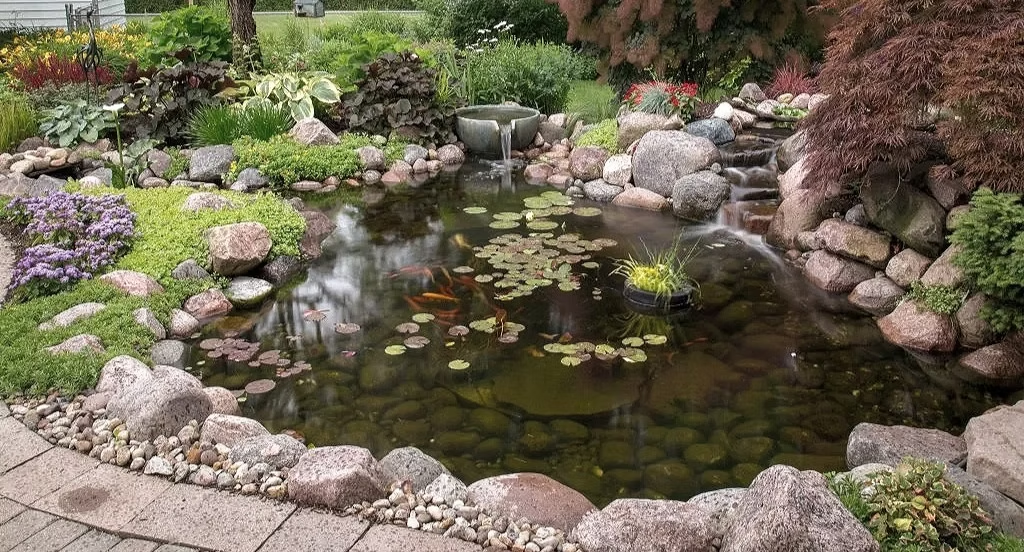
- Aquatic plants: Floating plants like water hyacinth and water lettuce provide natural shade that reduces sunlight penetration and competes with algae for nutrients. Aim to cover 50 to 70 percent of your pond’s surface with plants.
- UV clarifiers: An ultraviolet clarifier installed in your filtration system kills free-floating algae as water passes through. This is one of the most effective long-term solutions for green water in Florida ponds.
- Proper filtration: Ensure your filtration system is appropriately sized for your water feature. In Florida, you may need a filter rated for a larger volume than your actual pond size because biological activity runs higher in warm water.
Treating Existing Algae Problems
If algae has already taken hold, address it in stages rather than all at once. Killing a large algae bloom suddenly can crash your water’s oxygen levels and harm fish. Use algaecide treatments in small doses over several days, and add extra aeration during the treatment period to maintain oxygen levels.
Pump and Equipment Maintenance
Your water feature’s pump is its heart, and keeping it running efficiently is essential for water quality and feature performance.
Regular Pump Care
- Weekly inspection: Check your pump intake for debris buildup. Leaves, pine needles, and organic material can clog the intake and reduce flow, forcing the pump to work harder and shortening its lifespan.
- Monthly cleaning: Remove the pump and clean the impeller and housing at least once a month. In Florida, biofilm builds up faster than in cooler climates, reducing pump efficiency.
- Flow rate monitoring: Pay attention to changes in flow rate. A gradual decrease usually indicates filter or intake clogging. A sudden drop may signal a pump failure or blockage in the plumbing.
Electrical Safety
Florida’s frequent thunderstorms pose a risk to water feature electrical components. Ensure all electrical connections use GFCI protection, and consider installing a surge protector on your pump circuit. After severe storms, inspect all electrical connections for damage before restarting your system.
Seasonal Maintenance Calendar for Florida Water Features
Spring (March through May)
- Clean filters thoroughly and inspect all equipment after the drier winter months
- Begin weekly beneficial bacteria treatments as water temperatures rise
- Add or divide aquatic plants to ensure adequate coverage
- Test and adjust water chemistry
- Inspect liner or basin for any damage from dry season soil shifting
Summer (June through September)
- Monitor water levels daily during peak heat; evaporation can lower levels significantly
- Increase beneficial bacteria applications to weekly
- Clean pump intake and skimmer baskets twice weekly during heavy leaf and debris periods
- Monitor fish behavior for signs of stress from heat or low oxygen
- Add supplemental aeration during extreme heat waves
- After heavy rains, test water chemistry as runoff can introduce contaminants
Fall (October through November)
- Remove excess plant material as growth slows
- Clean and inspect all equipment before the holiday season
- Reduce feeding if you have fish, as their metabolism begins to slow slightly
- Check lighting fixtures and replace any burned-out bulbs
Winter (December through February)
- Continue running pumps and filters; do not shut down your system in Florida
- Reduce beneficial bacteria treatments to biweekly or monthly
- Remove fallen leaves promptly to prevent decomposition in the water
- This is an ideal time for major equipment upgrades or repairs while biological activity is at its lowest
Florida Winterization: What It Really Means
Unlike northern climates where water features must be drained and shut down for winter, Florida winterization is much simpler. You do not need to worry about freezing pipes or cracked basins. Instead, Florida winterization focuses on:
- Reducing feeding schedules for fish
- Cutting back on chemical treatments as water temperatures drop slightly
- Taking advantage of the slower growth period to perform deep cleaning and maintenance
- Inspecting and servicing equipment that has worked hard through the hot summer months
On the rare occasions when frost is predicted in Southwest Florida, you can simply keep your pump running. Moving water does not freeze as easily as still water, and our frost events are typically brief.
Fish Health in Warm Water
If your pond or water garden includes fish, Florida’s consistently warm water temperatures create both advantages and challenges. Fish remain active year-round, which means they need consistent feeding and water quality management. However, warm water holds less dissolved oxygen than cool water, so aeration becomes critically important.
- Maintain adequate aeration with air pumps, waterfalls, or fountain jets
- Avoid overstocking; warm water ponds support fewer fish per gallon than cool water ponds
- Feed high-quality food and remove uneaten food within five minutes to prevent water quality problems
- Watch for signs of parasites and bacterial infections, which are more common in warm water
Professional Water Feature Maintenance
While many routine tasks can be handled by homeowners, professional maintenance ensures your water feature operates at peak performance and catches problems before they become expensive repairs. At Alpha Omega Outdoor Services, our waterscape maintenance programs include regular water testing, equipment inspection, algae management, and seasonal service tailored to Florida’s climate.
Whether you have a simple pondless waterfall or an elaborate koi pond, our team has the expertise to keep your water feature looking its best throughout the year.
Ready to Get Started on Your Project?
Alpha Omega Outdoor Services provides free consultations for all landscaping, waterscape, and outdoor projects throughout North Port, Venice, Port Charlotte, and Sarasota County, FL. Our licensed team brings 7+ years of local experience to every project.
Call 941-587-0697 or request your free estimate online today.